

It Started the Way It Always Does
My pain didn’t arrive dramatically. There was no single catastrophic moment – no accident, no surgery, no obvious injury that explained everything. It crept in slowly, the way chronic pain often does. A persistent ache in my lower back that I kept attributing to stress, to posture, to getting older. Stiffness in the mornings that used to resolve by midday and then, gradually, stopped resolving at all.
By the time I took it seriously enough to seek help, it had been present for over a year. My first appointment was with my primary care physician. He ordered an X-ray, told me there was some mild disc degeneration – “normal for your age” – and recommended rest, ibuprofen, and following up if things didn’t improve. Things didn’t improve.
The Appointments That Went Nowhere
I won’t walk through every appointment in detail – partly because there were too many to count, and partly because, if you’re reading this, you probably already know this part of the story. You’ve lived some version of it yourself.
But here is the short version: I saw my primary care doctor multiple times. I was referred to an orthopedic specialist who reviewed an MRI and told me my herniated disc wasn’t “surgical” and that conservative management was the appropriate path. I was sent to physical therapy – a general outpatient clinic, the kind with a waiting room full of post-op knees and sports injuries – where I was given a sheet of exercises and seen by a different therapist almost every visit.
I followed the program. I did the exercises. I showed up every session. After six weeks, I was discharged with a home exercise program and a note in my file that said I had “completed treatment.” The pain hadn’t changed.
I tried a chiropractor for two months. I tried acupuncture. I tried the supplements that people in online forums swear by. I bought an expensive mattress. I got a standing desk. I modified my workouts, then stopped working out entirely because every time I pushed myself even slightly, the pain would spike and I’d lose three days to a flare-up. Each thing I tried carried a small amount of hope. And each time it didn’t work, that hope got a little harder to access.
The Moment I Almost Gave Up on Getting Help
About two and a half years into this, I made a decision that I now understand was actually a symptom of the condition itself. I decided to stop looking for answers.
Not because I wasn’t in pain – I was, every single day. But because the cost of trying things and having them fail had become, somehow, worse than just living with the pain quietly. Every failed treatment meant another round of hope and disappointment. Another appointment where I’d have to explain everything from the beginning to someone who would look at my chart and, eventually, look at me with that expression I had come to recognize: the one that meant you seem like a normal person, your imaging doesn’t show anything alarming, I’m not sure what else to tell you.
I want to name this moment clearly, because I think it’s one of the most important and least discussed parts of the chronic pain experience: the point at which a person stops seeking help – not because the pain is gone, but because seeking help has become its own source of exhaustion and disappointment. If you are at that point, or somewhere near it, I want you to keep reading.
What Made Me Try One More Time
It was, honestly, a conversation I didn’t expect to have. A coworker – someone I hadn’t discussed my pain with, because I’d stopped discussing it with anyone – mentioned offhandedly that his wife had been dealing with fibromyalgia for years and had recently started at a pain management clinic that also offered physical therapy. He said the difference wasn’t the specific treatment. It was that someone finally explained to her what was actually happening – why the pain had persisted, why the things she’d tried hadn’t worked, and what a different approach would look like.
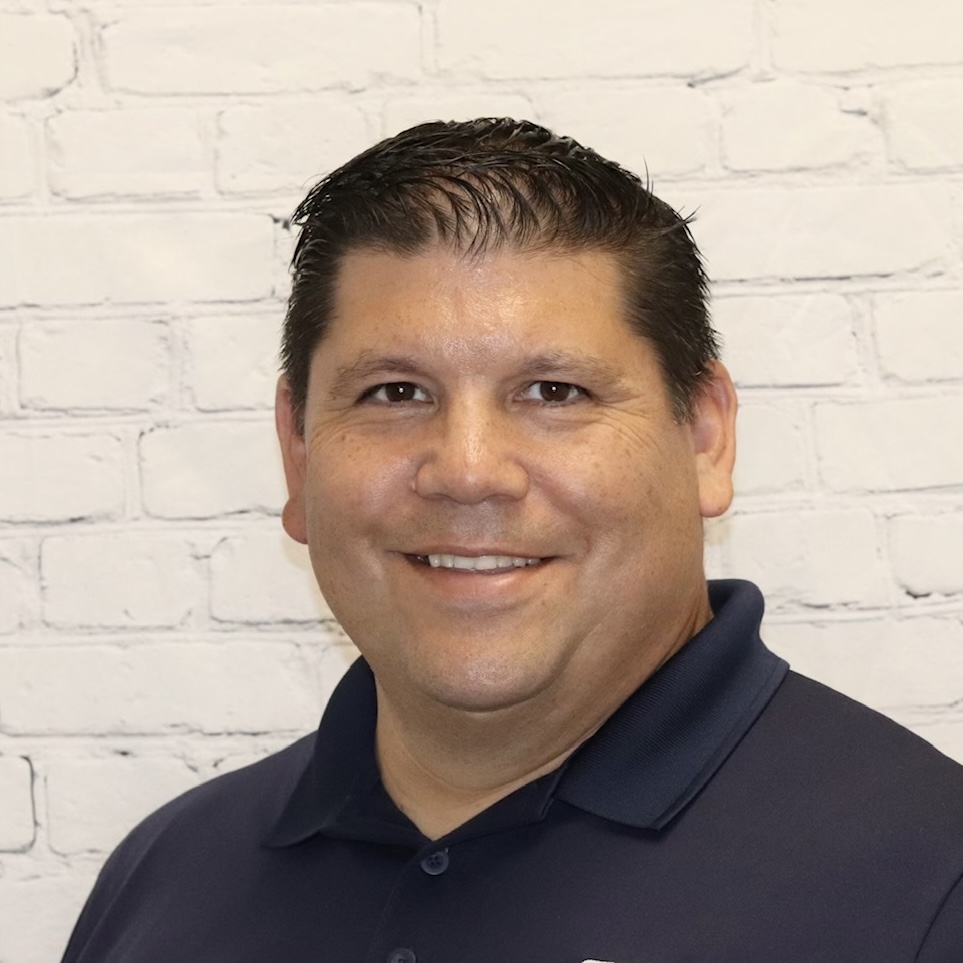
He mentioned Sun Pain Management. I didn’t book an appointment immediately. I looked at their website. I read about their approach – the focus on chronic pain specifically, the physical therapy program designed around pacing rather than pushing, the emphasis on education as part of treatment. I watched the videos on their site. I read about Joe Rasor, their Physical Therapy Director, and his 25 years of specialization in complex pain cases.
What struck me was not that the language sounded different from other clinics. It was that it sounded accurate. Like someone had actually described what chronic pain feels like from the inside – the fear of movement, the cycle of avoidance, the way the nervous system gets stuck in a pattern – rather than treating it as a straightforward mechanical problem waiting to be fixed. I made an appointment. I told myself it would probably be the same as everything else. But I made it anyway.
The Evaluation That Changed Everything
The first appointment at Sun Pain Management was unlike any clinical appointment I had been to in two and a half years of trying.
It started with time. Not the compressed, efficient, moving-on-to-the-next-thing time of most appointments, but genuine, unhurried time. Joe Rasor asked me to tell him about my pain – and then actually listened to the answer. Not just to the clinical facts, but to the full picture: how long it had been going on, what I’d tried, what had helped temporarily and what hadn’t helped at all, what a difficult day looked like, and what I was hoping to be able to do again that I couldn’t do now.
He asked about my sleep. He asked about my work. He asked what movements I had started avoiding – not just the obvious ones, but the small, quiet ones. The reaching, the bending, the things I did automatically a couple of years ago and now do with a careful internal calculation first.
Then he did a thorough physical assessment – movement analysis, strength testing, neurological screening – and afterward he sat down and explained what he found.
What he said in the next twenty minutes had more practical impact on my understanding of my own condition than everything I had read or been told in the previous two and a half years.
He explained central sensitization – how, after sustained pain input, the nervous system recalibrates in ways that lower the threshold for pain and widen the range of things that trigger it. He explained why the standard PT exercises hadn’t helped – not because exercise is wrong for my condition, but because the program I’d been given wasn’t designed for a sensitized nervous system. He explained the fear-avoidance cycle – and as he described it, I recognized myself in every stage of it, including the part where a person stops seeking help because seeking help has become its own source of pain. I remember thinking: Someone finally understands what has been happening. That sounds like a small thing. It wasn’t.
What Treatment Actually Looked Like
I want to be honest about this, because I think patients deserve honesty more than they deserve a smooth story. The early weeks of treatment did not produce dramatic results. That was expected – Joe had told me it would be that way, and explaining why it would be that way was part of the first session. We were not trying to eliminate the pain quickly. We were trying to give my nervous system enough safe, positive movement experience to begin recalibrating – slowly, consistently, without triggering the threat response that had been running the show for two and a half years.

My program was built specifically around my starting point. The exercises were not the standard protocol I had done before. The pacing was precise – we identified what I could do without a significant flare-up and used that as the baseline, adding to it in increments small enough that my nervous system didn’t interpret the change as a threat.
Every session included explanation. Why this exercise and not another. What was happening in my body during this movement. Why the fact that it felt slightly uncomfortable didn’t mean it was causing harm – and how to tell the difference between discomfort that means progress and pain that means we need to adjust. That distinction, which sounds simple, was something I had never been taught before. It changed how I moved through every session.
The hands-on work – manual therapy, dry needling at targeted points of chronic muscle tension – addressed things that had been stuck for a long time. Not painfully. Not in a way that sent me home worse than I arrived. But in a way that, over time, began to produce real and measurable change in what my body could do.
By week five, I noticed I was waking up without immediately cataloguing my pain before getting out of bed. I didn’t note it consciously at the time – I just got up. I realized it later that evening and I sat with it for a moment, because it had been so long since I’d done that without thinking about it.
By week eight, I was walking distances I hadn’t walked in over a year. Not because I pushed through pain. Because I had gradually rebuilt the capacity – and more importantly, the confidence – to do it without the nervous system flagging every step as dangerous.
What Made Sun Pain Different: The Honest Answer
I’ve thought about this a lot, because I think it’s a question worth answering carefully. It would be easy to say “the treatments were better” and leave it at that. But that isn’t quite right, or at least it isn’t complete.
The treatments were appropriate, evidence-based, and well-chosen for my specific presentation. The dry needling helped. The manual therapy helped. The exercise program was genuinely different from what I’d done before – because it was built around my nervous system’s capacity, not around a generic protocol.
But the thing that made the difference – the thing that made those treatments work where other treatments had failed – was understanding.
When I understood what was happening in my nervous system, the fear response began to shift. Not completely, not immediately, but meaningfully. The movement that had felt like a risk started to feel like medicine. The discomfort that had always signaled danger started, slowly, to become interpretable as something else – as change happening, as the nervous system learning something new.
Without that shift, I don’t think the physical treatments would have held. Because the fear-avoidance cycle would have remained intact underneath whatever exercises I was doing. And fear-avoidance is, ultimately, what was running the show.
Sun Pain Management addressed that directly. It is the only place I’d been where that was treated as a clinical priority – not an afterthought, not a piece of paperwork, but a central part of every session from the first appointment onward.
If You’ve Tried Everything and It Hasn’t Worked
I want to say something directly to the person reading this who is in the place I was two and a half years ago – the place of having tried too many things, spent too much hope, and arrived at the quiet decision that this is probably just how life is going to be.
The fact that previous treatments haven’t worked does not mean you are untreatable. It often means the treatments weren’t built for what you actually have. Chronic pain is not an acute injury that has lasted longer. It is a different condition, driven by nervous system changes that most standard rehabilitation approaches are not designed to address.
A program that is designed for it – with education, with pacing, with clinical expertise in exactly this kind of case – can produce results that everything else couldn’t. Not because it is magic. Because it is the right tool for the actual problem.
That is what Sun Pain Management offered me. And it is what I think they can offer you.