Most People Have Never Heard of It. Most People Who’ve Tried It Won’t Stop Talking About It.
If you’ve spent any time looking into treatment options for chronic pain, you’ve probably encountered a familiar list: physical therapy, injections, anti-inflammatories, rest, surgery. Maybe you’ve tried several of them. Maybe you’ve tried all of them.
What is almost certainly not on that list – for most patients – is Osteopathic Manipulative Medicine.
Not because it doesn’t work. The clinical evidence behind it is substantial and growing. Not because it’s experimental. It has been practiced and refined for well over a century. But because it sits in a space that most standard physical therapy clinics simply don’t occupy – requiring a level of training, clinical judgment, and hands-on skill that goes well beyond what a conventional PT program offers.
At Sun Pain Management, Osteopathic Manipulative Medicine is integrated into our physical therapy program as one of the more advanced tools available to appropriate patients. It is not offered at most clinics. The fact that it is available here – within a comprehensive, multidisciplinary pain management environment – is one of the things that genuinely sets this program apart.
What Is Osteopathic Manipulative Medicine?
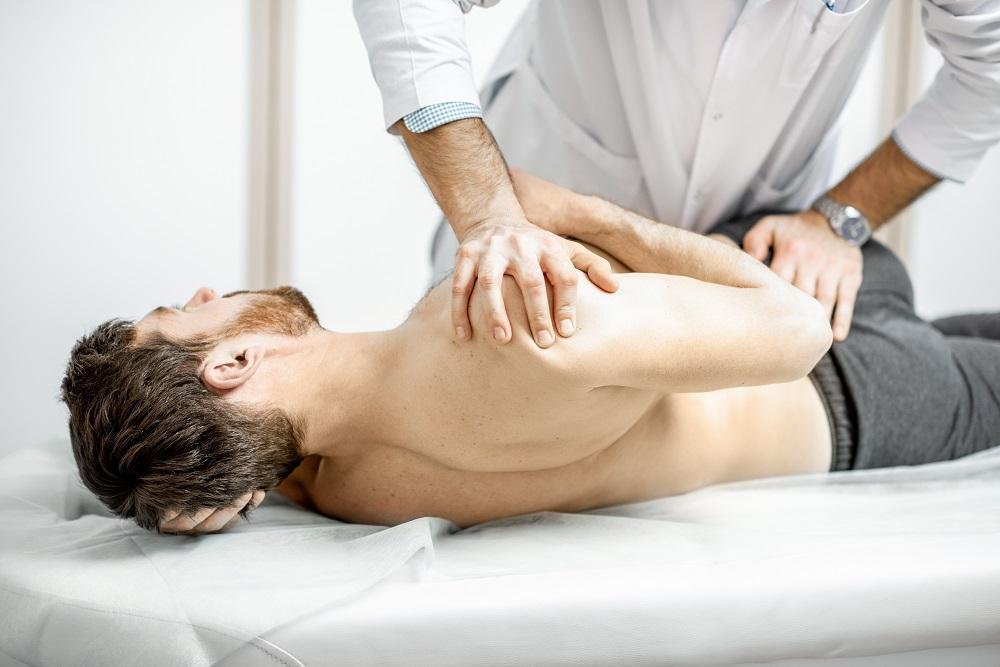
Osteopathic Manipulative Medicine – also referred to as Osteopathic Manipulative Treatment, or OMT – is a system of hands-on diagnosis and treatment based on the foundational principles of osteopathic medicine.
Osteopathic medicine was developed in the late 19th century on a core premise that remains clinically relevant today: the body is an integrated unit, and the relationship between its structure – bones, muscles, connective tissue, fascia, joints – and its function is fundamental to health. When structural components are restricted, misaligned, or dysfunctional, function is compromised. And when function is compromised, pain, reduced mobility, and systemic effects follow.
OMM addresses these structural dysfunctions directly – using the hands to assess, diagnose, and treat restrictions in the musculoskeletal system that are contributing to a patient’s pain or functional limitation.
This is not the same as a standard massage. It is not the same as chiropractic manipulation, though there is some surface-level overlap. And it is considerably more sophisticated than the joint mobilization techniques used in conventional physical therapy – though OMM does include mobilization as one of its many techniques.
What makes OMM distinct is the depth and integration of its approach. A practitioner trained in OMM is not simply loosening a tight muscle or mobilizing a stiff joint. They are assessing the entire musculoskeletal system – the relationship between regions, the compensatory patterns that have developed over time, the fascial restrictions that connect symptoms in one area to dysfunction in another – and using that whole-body understanding to guide precise, targeted treatment.
The Principles Behind OMM
To understand why OMM works – and why it works differently from other hands-on approaches – it helps to understand the principles it is built on.
The Body as an Integrated Unit
Osteopathic medicine rejects the idea that pain in one area can be fully understood in isolation. A patient with chronic low back pain, for example, is not simply experiencing a problem at L4-L5. They are experiencing a pattern – one that likely involves compensatory tension in the hips, restricted mobility in the thoracic spine, altered movement mechanics through the pelvis, and neurological changes driven by months or years of guarding and avoidance.
OMM treats the pattern, not just the location of pain. This is why patients who have had localized treatments applied to their primary pain site, with limited success, sometimes experience significantly different results when the entire system is assessed and treated.
Structure and Function Are Inseparable
Restriction in a joint affects how force is distributed through surrounding tissue. Fascial tension in one region creates pull on distant structures. A misaligned pelvis changes how load travels through the lumbar spine. These are not theoretical claims – they are observable mechanical realities that any thorough structural assessment will reveal.
OMM works by identifying and addressing these structural contributors to pain and dysfunction – restoring normal mobility and alignment so that the body can distribute load, move, and function as it is designed to.
The Body Has an Inherent Capacity for Self-Healing
Osteopathic medicine holds that the body, given the right conditions, has a profound capacity to heal itself. The role of OMM is not to impose a correction from outside, but to remove the structural barriers that are preventing normal healing and function from occurring.
This principle aligns closely with the philosophy at Sun Pain Management – where the goal of treatment is always to restore the body’s own capacity, not to create dependency on ongoing intervention.
The Circulatory and Nervous Systems Are Central to Health
OMM pays particular attention to how structural dysfunction affects blood flow and nerve function. Restricted joints and tight fascia can compress blood vessels and nerve pathways, reducing circulation and altering neural signaling in ways that directly contribute to chronic pain. Restoring structural freedom in these areas can have effects that extend well beyond the mechanical – influencing the body’s pain-processing, inflammatory response, and healing capacity.
Key OMM Techniques Used in Chronic Pain Treatment
Osteopathic Manipulative Medicine encompasses a broad range of specific techniques, selected based on the patient’s condition, their tissue characteristics, and the clinical goals of treatment. The following are among the most commonly used in the context of chronic pain rehabilitation.
- Soft Tissue Techniques: Gentle stretching and pressure applied to muscles and connective tissues to reduce tension, improve circulation, and prepare the body for treatment.
- Myofascial Release: Sustained pressure used to release restrictions in fascia, helping improve mobility and reduce pain that may extend beyond the original injury site.
- High-Velocity Low-Amplitude (HVLA) Thrust: A quick, controlled movement applied to restricted joints to restore normal range of motion when clinically appropriate.
- Muscle Energy Technique: An active approach where patients contract specific muscles against resistance to improve mobility, reduce tension, and correct movement imbalances.
- Counterstrain: A gentle technique that places the body in comfortable positions to reduce pain and allow muscles to relax.
- Balanced Ligamentous Tension (BLT): Subtle techniques that address tension within ligaments and joints, often used for complex or multi-region pain conditions.
- Craniosacral Techniques: Light-touch techniques focused on the skull, sacrum, and surrounding tissues to help relieve headaches, neck pain, and related symptoms.
Who Benefits Most From OMM?
Osteopathic Manipulative Medicine is not the right tool for every patient or every condition. At Sun Pain Management, it is offered as part of a comprehensive, individualized treatment plan – and its use is determined by thorough clinical assessment, not applied as a default protocol.
That said, there are specific patient presentations where OMM tends to produce particularly significant results.
- Patients with multi-region pain. When pain has spread beyond a single location – or when treating one area consistently fails to produce lasting relief because other structural contributors are being missed – OMM’s whole-body assessment often identifies and addresses the connections that localized treatment cannot reach.
- Patients with chronic low back and pelvic pain. The lumbar spine, pelvis, sacrum, and hips form an interconnected mechanical unit. Dysfunction in any part of this system affects the others. OMM’s ability to assess and treat this entire region simultaneously makes it particularly well-suited to the complex, multi-contributor presentations that characterize most chronic low back pain cases.
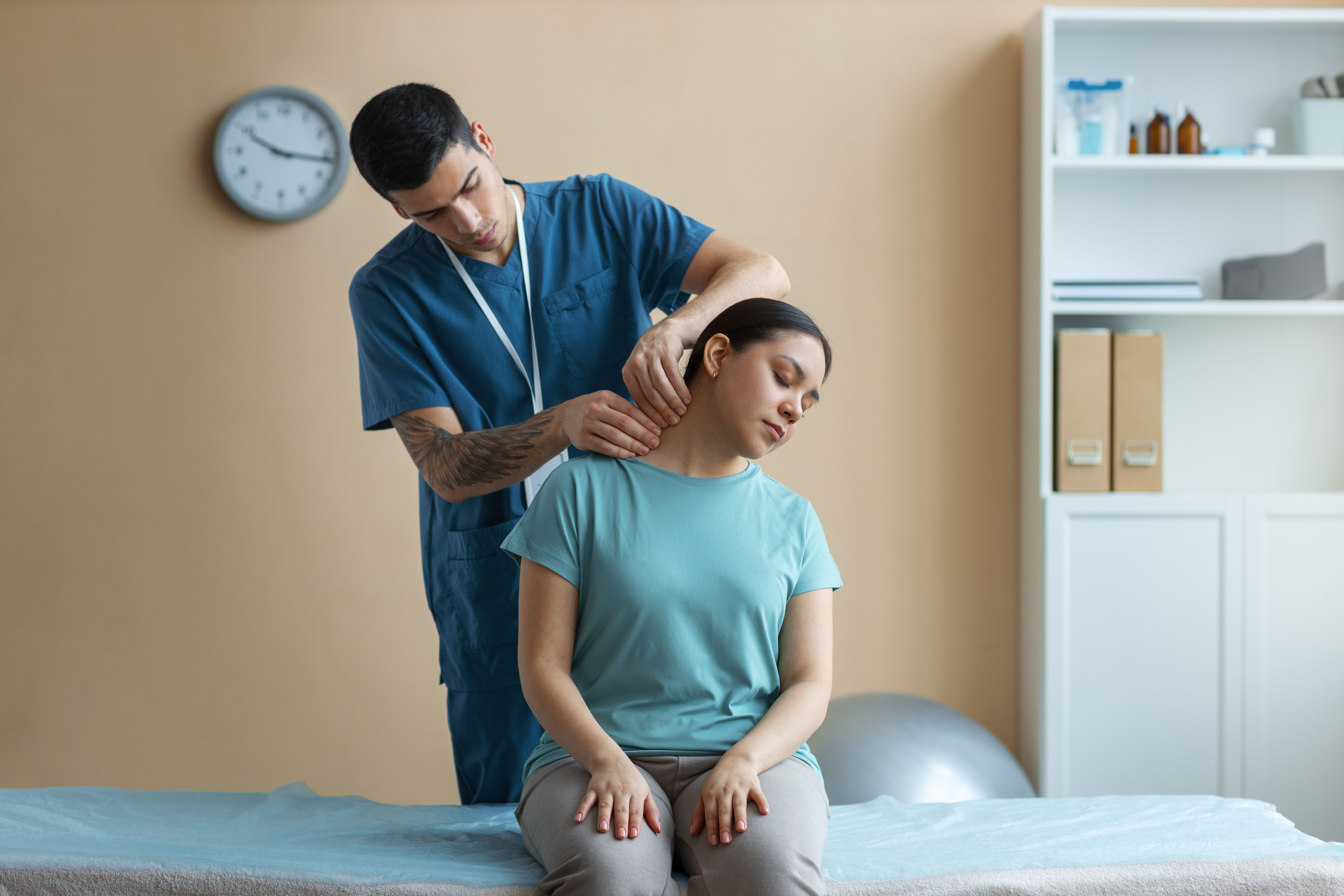
- Patients with cervical pain and headaches. Chronic neck pain and cervicogenic headaches frequently involve fascial restrictions, joint dysfunction, and muscle tension patterns that extend well into the thoracic spine and shoulder girdle. OMM addresses these patterns comprehensively – and for many patients, produces headache relief that localized cervical treatment alone has not achieved.
- Post-surgical patients with restricted mobility. Following surgery, scar tissue, fascial restrictions, and compensatory guarding patterns can develop in ways that conventional PT struggles to address fully. OMM techniques – particularly myofascial release and soft tissue work – are effective at restoring mobility in these cases without placing undue stress on healing tissue.
- Patients who have plateaued in conventional PT. When a patient has been compliant with a physical therapy program, doing everything right, and progress has stalled – OMM is often what identifies the structural barrier that the conventional program was unable to address. Removing that barrier can restart progress that has been stuck for weeks or months.
- Patients with high pain sensitivity or guarding. The range of OMM techniques includes extremely gentle, indirect approaches that are appropriate for patients who cannot tolerate more forceful manual therapy. This makes OMM accessible to patients whose pain or sensitivity has made other hands-on treatments difficult or counterproductive.
OMM Within the Sun Pain Management Framework
The integration of Osteopathic Manipulative Medicine into our physical therapy program reflects something fundamental about how Sun Pain Management approaches chronic pain: the understanding that no single technique is sufficient on its own, and that the most effective treatment is one that brings together the right tools, applied in the right sequence, for the right patient.
OMM does not replace the other components of our physical therapy program. It works alongside them.
A patient receiving OMM at Sun Pain Management will typically also be engaged in therapeutic exercise – because restoring structural mobility through OMM creates the conditions for exercise to be more effective, and exercise reinforces and sustains the improvements that OMM produces.
They will be receiving patient education – because understanding what is happening in their body, and why the structural restrictions being treated are contributing to their pain, is a critical part of how lasting change occurs.
They may be receiving dry needling or ShockWave Therapy alongside OMM – because chronic pain frequently involves multiple tissue-level problems that benefit from different, complementary interventions applied together.
And they will be progressing through a personalized, paced rehabilitation plan – because the goal is always not just to feel better in the clinic, but to function better in real life, independently and sustainably.
This is the framework within which OMM is most effective. And it is the framework that Sun Pain Management is built around.
Find Out if OMM Is Right for You
The only way to know whether Osteopathic Manipulative Medicine is appropriate for your specific presentation is through a thorough clinical evaluation. At Sun Pain Management, every patient receives exactly that – a complete, unhurried assessment that looks at the whole picture, identifies what is contributing to your pain, and builds a plan around what your body actually needs.
If OMM is the right tool for your situation, we will tell you why – and exactly how it fits into your overall treatment plan.