


You know your pain is real. Yet when a doctor asks, “Can you describe it?” the words may suddenly disappear. That moment can feel frustrating, especially if pain has disrupted your sleep, work, mobility, or relationships. You may worry that you are giving too much detail, not enough detail, or using the “wrong” words.
There is no perfect way to talk about pain. Pain is personal, and you do not have to prove that you are hurting. However, learning how to describe pain to a doctor clearly can help your healthcare team recognize patterns, consider possible causes, choose appropriate examinations or tests, and build a treatment plan around what matters most to you.
This practical guide will help you prepare for a pain management appointment, explain what you feel in medically useful language, and advocate for your needs with greater confidence.
1. Why the Way You Describe Pain Matters
Pain cannot be measured with a blood test or seen in full on an imaging scan. An X-ray or MRI may reveal structural changes, but it cannot show exactly how much discomfort you feel or how that discomfort affects your life. Your description is therefore an important part of the clinical picture.
A thorough pain assessment looks beyond intensity. Your doctor may consider location, sensory quality, timing, triggers, associated symptoms, and effects on physical and emotional function. These details help distinguish between pain mechanisms and guide evaluation.
For example, a deep ache that worsens when you use a joint may suggest a different process from burning pain that travels down a leg. Sharp pain after a new injury may require a different approach from widespread pain that has fluctuated for years. No single word establishes a diagnosis, but the complete pattern gives your clinician useful clues.
Pain is more than a number
Many appointments include the familiar 0-to-10 pain scale, where 0 means no pain and 10 represents the worst pain you can imagine. This scale can be useful for tracking change over time, but the number is only one part of your story. Your “6” does not need to match another person’s “6.” What matters most is that you use the scale consistently and add context.
Instead of saying only, “My pain is a 7,” you might say, “It is usually a 4 when I am sitting, rises to a 7 after ten minutes of walking, and makes me stop and rest.” This tells your doctor about intensity, activity tolerance, and functional impact in one clear statement.

It can help to give three ratings: your pain now, your usual level, and the worst level during a flare. If a number feels too abstract, describe what the pain prevents you from doing. Function often provides a more meaningful baseline for progress than a score alone.
2. The Essential Details Your Doctor Needs to Hear
When learning how to explain pain to a doctor, think in terms of a pattern rather than a single symptom. The following details create a concise but complete picture.
Show exactly where the pain begins and where it travels
Point to the area on your body or mark it on a simple body diagram. Be as specific as possible. Is the pain in the center of your lower back, on one side, deep in the hip, around a joint, or close to the skin? Does it stay in one place, or does it radiate into your buttock, leg, arm, chest, or abdomen? Is it on one side or both sides?
The place where you feel pain is not always the place where the problem begins. Referred pain may be felt away from its source, while radicular pain can travel along an irritated nerve. “It starts in my lower back and shoots down the outside of my right leg to my ankle” is more useful than “My whole leg hurts.”
Choose words that describe the sensation
Pain description words can help your doctor consider whether the symptoms sound more musculoskeletal, inflammatory, visceral, or neuropathic. You do not need to know the medical category; simply choose the words that feel accurate.
Nociceptive pain, which can occur when tissues are injured or inflamed, is often described as aching, throbbing, tender, sore, cramping, sharp, or stabbing. Neuropathic pain, associated with an injured or irritated nerve, may feel burning, shooting, electric, tingling, pins-and-needles, or numbness. Some people experience allodynia, meaning that normally nonpainful contact—such as clothing or a light touch—hurts. Others notice pressure, tightness, pulling, heaviness, or a deep, hard-to-locate discomfort.
Your words do not have to fit neatly into one category. Say if the sensation changes. For example: “It is a dull ache most of the day, but when I bend forward, I feel a sharp catch followed by burning down my leg.”
Explain when it started and how it behaves over time
Identify when you first noticed the pain. Did it begin suddenly after a fall, lifting injury, procedure, illness, or accident, or develop gradually without a clear event? Describe whether the pain is constant or intermittent, how long episodes last, and whether it follows a daily pattern. Note if it is worse in the morning, after activity, while sitting, or at night. Tell your doctor if the pain has remained stable, slowly progressed, spread to a new area, or recently changed in character.
Identify triggers, relieving factors, and associated symptoms
Explain what reliably brings the pain on or makes it worse: walking, standing, sitting, bending, lifting, coughing, eating, stress, cold weather, or a particular sleeping position. Then describe what helps, even temporarily, such as rest, changing position, gentle movement, heat, ice, medication, or leaning forward.

Mention symptoms that occur with the pain. These may include numbness, tingling, weakness, muscle spasms, swelling, redness, fever, dizziness, headaches, bowel or bladder changes, balance problems, fatigue, or unexplained weight change. Do not leave out a symptom because you are unsure whether it is related; your clinician can decide its relevance.
Describe the effect on your daily life and your priorities
Be concrete. Instead of saying, “It affects everything,” explain: “I wake up three times a night,” “I can stand for only fifteen minutes,” or “I cannot sit comfortably during family trips.” Also tell your doctor what improvement would matter most. A realistic first goal might be sleeping five uninterrupted hours, walking to the mailbox, returning to physical therapy, picking up a grandchild, or completing a work shift with fewer breaks. Active pain management is not always about eliminating every sensation. It may focus on reducing pain, restoring function, building confidence, and helping you participate more fully in life.
3. How to Prepare Before Your Pain Management Appointment
Good communication begins before you enter the exam room. A few minutes of preparation can reduce pressure and help you remember details when the appointment feels rushed or emotionally difficult.
Keep a short pain diary
For several days—or one to two weeks if symptoms vary—record the time and location of the pain, its quality and intensity, what you were doing when it started, accompanying symptoms, what you tried, and how much relief you received. Include sleep and activity changes. A brief, consistent record is usually more helpful than pages of unorganized notes.
Look for patterns rather than trying to document every moment. Perhaps pain increases after twenty minutes of standing, wakes you at the same time each night, or improves when you change posture. Bring the diary to your visit or summarize the two or three patterns you noticed.
Prepare your health and treatment history
Bring an updated list of prescription medications, over-the-counter products, vitamins, supplements, and topical treatments, including doses when possible. Note what you have already tried for pain—such as physical therapy, injections, surgery, home exercises, massage, or behavioral strategies—and explain the benefit, side effects, and reason you stopped.
Your doctor also needs to know about allergies, medical conditions, prior injuries, surgeries, recent test results, and relevant family history. Be open about alcohol, tobacco, cannabis, or other substance use because these can affect treatment safety. Share concerns about medication, side effects, cost, or past experiences directly.
Lead with a 30-second summary
A short opening statement can keep the conversation focused. Try this structure:
“For the past [time period], I have had [quality] pain in [location] that [stays there/travels to an area]. It is usually [intensity], becomes worse with [trigger], and improves with [relieving factor]. It now limits [specific activity or function]. I am most concerned about [change or symptom], and my main goal is [priority].”
For example: “For six months, I have had burning pain in my lower back that shoots into my left calf. It is usually a 4 but reaches a 7 after about ten minutes of standing. Sitting helps, but I now avoid grocery shopping and wake twice most nights. My goal is to walk for thirty minutes and sleep more consistently.” This script does not replace conversation. It simply gives your doctor a clear starting point.
Bring your most important questions
Write down your top three questions in order of importance. Ask what may explain the pattern, whether testing is needed, what treatment options and risks to consider, what you can safely do at home, and how progress will be measured. At the end, repeat the plan in your own words: “To make sure I understand, the next step is…”
4. Communicating With Confidence and Knowing When Pain Is Urgent
The goal of a pain appointment is a collaborative understanding of your symptoms—not a performance. Use plain language and say when a question is difficult to answer. Describe what a manageable day looks like, what happens during a flare, and how often each occurs. If time is limited, return to the most important change or concern.
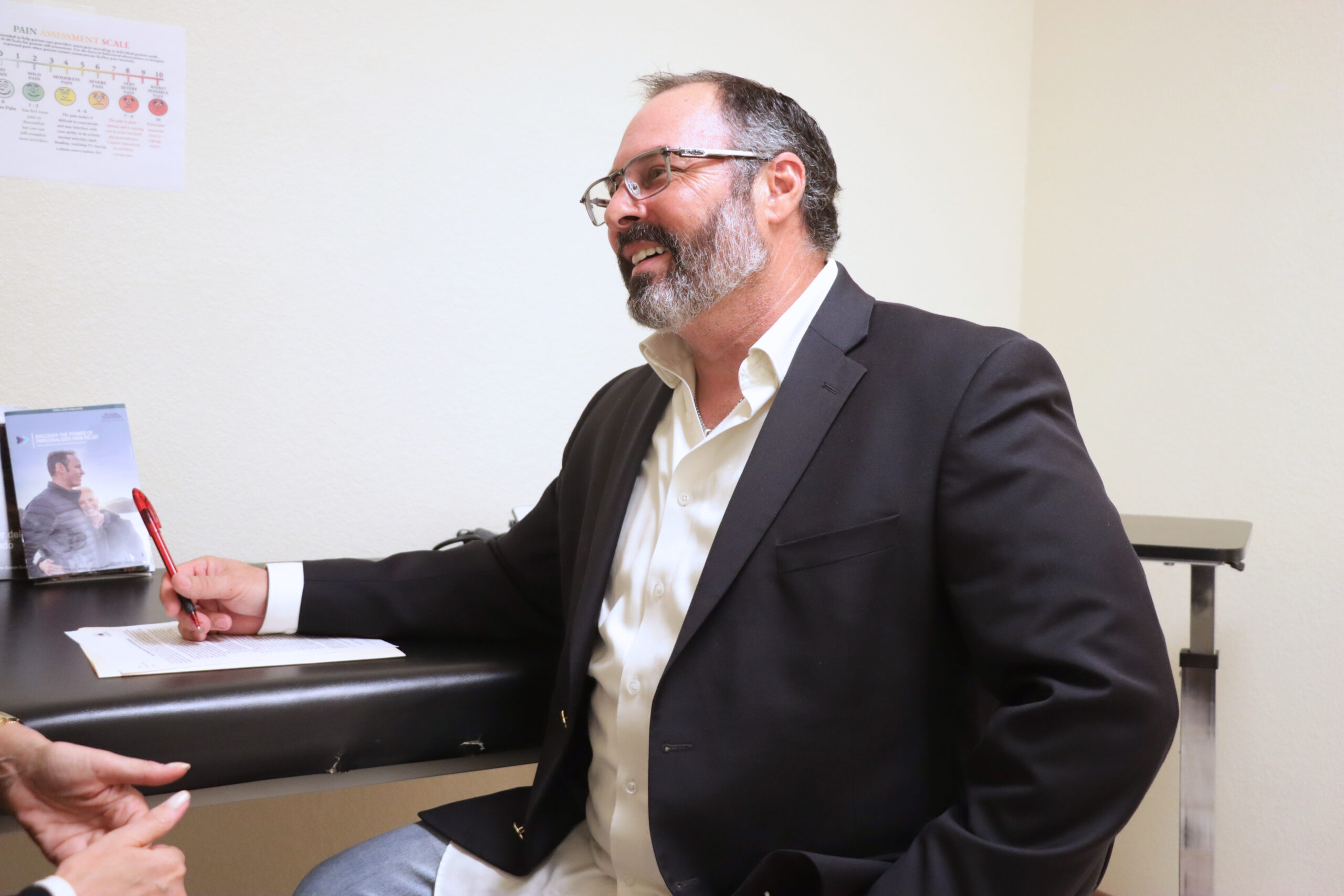
If you feel dismissed, ask: “What do you think may be causing this pattern?” “What serious causes have been considered?” or “If this plan does not help, what is the next step?” You may seek another medical opinion when communication repeatedly breaks down or important concerns remain unaddressed.
Know when not to wait for a routine appointment
Seek immediate medical help for sudden chest pain or pressure; severe shortness of breath; fainting; sudden confusion; new facial droop, speech difficulty, or one-sided weakness; a sudden severe headache; major trauma; uncontrolled bleeding; or severe, rapidly worsening pain. Urgent assessment may also be needed for new loss of bowel or bladder control, saddle-area numbness, rapidly progressive limb weakness, fever with severe back pain, or a limb that becomes cold, pale, markedly swollen, or discolored. If symptoms feel life-threatening or dramatically different from your usual pain, call emergency services.
Better conversations can lead to more personalized care
Learning how to describe pain to a doctor is not about finding a magical phrase. It is about turning a deeply personal experience into a pattern your care team can understand: where it hurts, what it feels like, when it happens, what changes it, and how it is limiting your life.
You deserve to be heard, and you can play an active role in your care. Track the patterns you notice, bring your questions, speak honestly about your concerns, and define the improvements that would make daily life more manageable. Even when chronic pain cannot be resolved in a single visit, a clear conversation can create a stronger starting point for thoughtful evaluation and a personalized recovery plan. If persistent pain is affecting your sleep, movement, work, or independence, the team at Sun Pain Management can help evaluate your symptoms and discuss an individualized path forward.